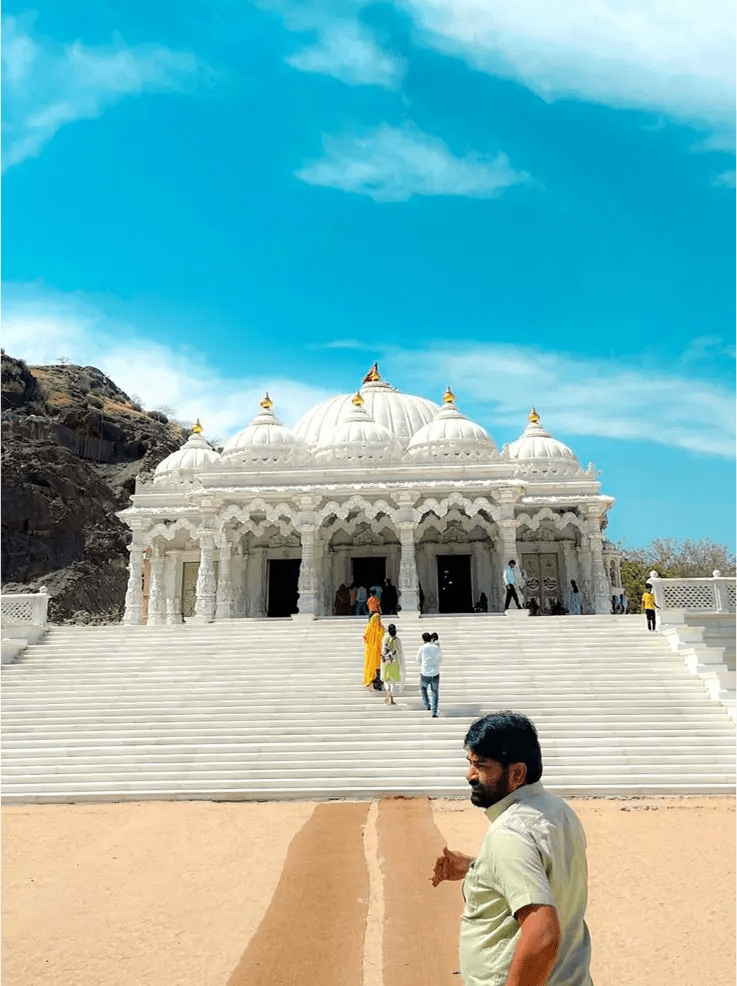
Both Navratris are dedicated to the worship of the Divine Mother, but they carry distinct astronomical, seasonal, and ritual significance at the Nagana temple.
Chaitra Navratri (Spring)
Occurring in March or April, Chaitra Navratri marks the transition into summer. It aligns with the Hindu New Year (Samvatsara). The rituals are focused on renewal, creation, and welcoming the warm season. The weather is warm, and the morning prayers are particularly beautiful as the sun rises over the desert.
Ashwin Navratri (Autumn)
Ashwin Navratri, held in September or October, marks the onset of winter. It is celebrated on a much larger scale, with cooler weather attracting massive crowds. The famous Ashtami Havan is the highlight of this festival, culminating in Dussehra. The festive energy is highly vibrant, with elaborate night lighting across the village.
Which is Best to Attend?
For pleasant weather and grander celebrations, Ashwin Navratri is the preferred choice for long-distance travelers. For a peaceful, introspective experience with fewer crowds, Chaitra Navratri is highly recommended.
Temple Pujari
Temple Trust Scholar & Representative
यह लेख श्री नागणेच्या माता मंदिर ट्रस्ट के आधिकारिक विद्वानों और पुजारियों द्वारा ऐतिहासिक ग्रंथों व मान्यताओं के सत्यापन के आधार पर प्रस्तुत किया गया है।